

Fall Roof Maintenance Checklist for Wisconsin Homeowners
A focused plan for roof maintenance in Wisconsin helps you find vulnerable areas before freezing weather arrives. Fallen leaves, heavy rain, early frost, and shifting temperatures can expose drainage problems and existing roof wear. Early attention helps you separate simple fall upkeep from concerns that may require professional repair.
Your fall checklist should examine drainage, surface materials, roof openings, attic conditions, and nearby tree growth. Each check reveals different warning signs, from loose shingles outside to moisture stains beneath the roof deck. Complete the checklist during fall so you retain more repair options and a clear record for your roofer.
What Should a Fall Roof Maintenance Checklist Include?
Your checklist should cover gutters, downspouts, shingles, flashing, vents, roof penetrations, attic moisture, insulation, and ventilation. You should also note overhanging branches, collected debris, loose materials, and changes visible from ground level. Leave rooftop access, structural assessments, and repair work to a qualified roofer as Wisconsin winter approaches.
Roof Maintenance in Wisconsin Starts Before the First Freeze
Fall gives you a narrow window to examine exposed roof areas while developing problems remain visible. Plan roof maintenance in Wisconsin early enough to allow repairs while temperatures and roof access remain favorable. Choose a dry, calm day so you can observe conditions clearly and document each area without rushing.
Photograph every visible roof slope from the ground, including valleys, edges, chimneys, vents, and flashing.
Identify overhanging branches and remove loose yard debris that could strike roofing during winter weather.
Check gutters and downspouts for leaves, sagging sections, loose fasteners, and blocked discharge points.
Look across shingles for lifted edges, cracks, missing pieces, exposed fasteners, or unusual color changes.
Inspect accessible attic areas during daylight and note stains, damp materials, musty odors, or visible openings.
Record each concern beside its photograph, including its location and whether the condition appears new. Clear notes help a roofer distinguish recent changes from older wear during a later evaluation.
Stay off wet, frosted, steep, or unfamiliar roofing because surface traction can change without warning. Place any inaccessible area on your professional repair list rather than create an unnecessary fall hazard.
Keep Water Moving From Roof Valleys to the Ground
Water needs an open path from roof valleys through gutters and downspouts, then safely away from your foundation. Leaves trapped near chimneys, flashing, or lower slopes can hold moisture and redirect runoff beneath shingle edges. Use binoculars from ground level and request professional removal whenever buildup requires ladder or rooftop access.
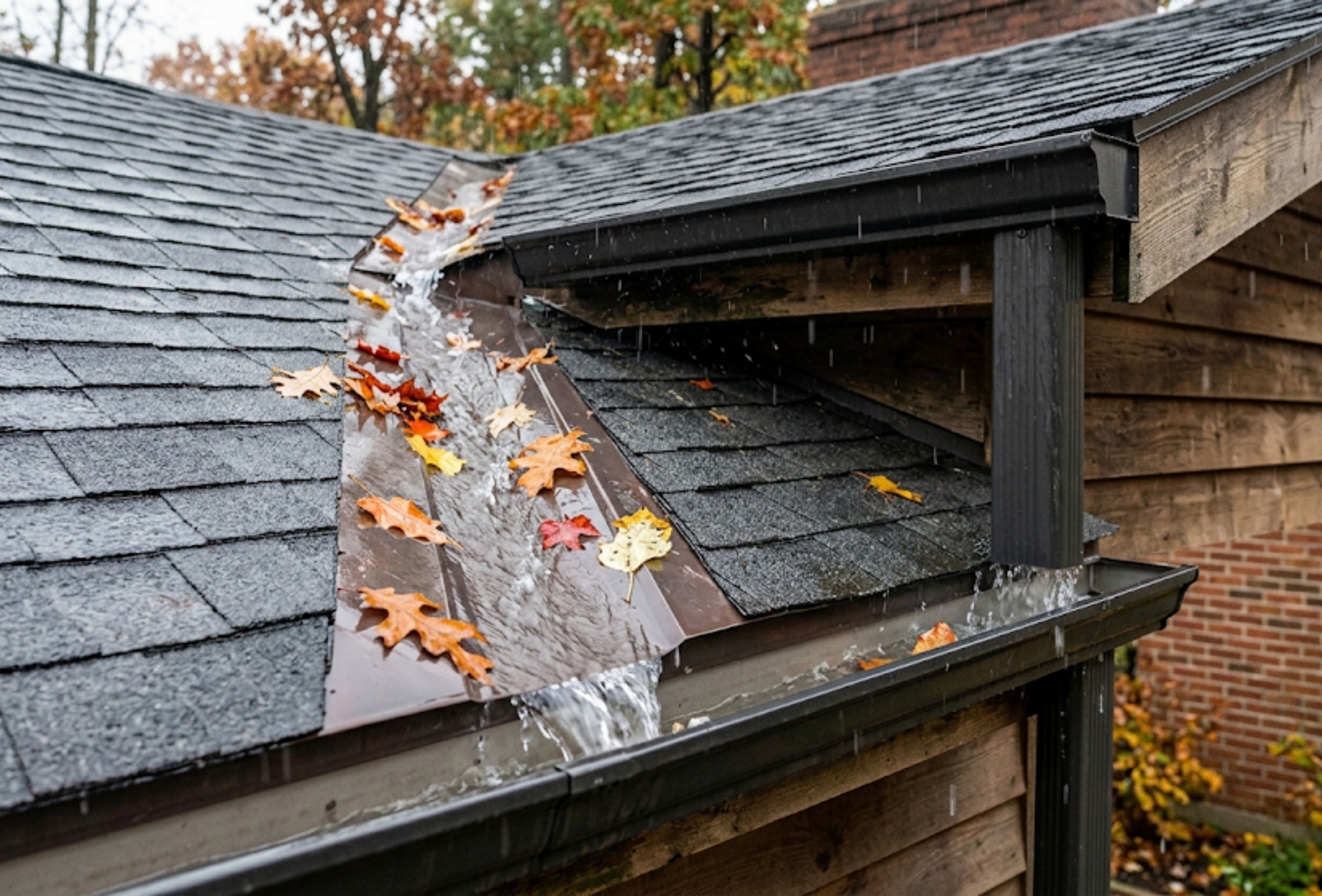
Check gutters for pooled water, separated seams, loose fasteners, damaged fascia, and granules near downspout outlets. Flush reachable downspouts before freezing temperatures arrive, then confirm each discharge point follows your property’s drainage design. Maintain open drainage paths during roof maintenance in Wisconsin to reduce backups when snow limits normal runoff.
A Ground-Level Scan Can Reveal Shingle and Flashing Problems
Begin roof maintenance in Wisconsin by scanning each roof plane from several ground-level angles with binoculars or camera zoom. Look for missing tabs, lifted edges, cracks, curling corners, exposed fasteners, and visibly bare shingle areas.
Examine flashing around chimneys, valleys, vents, skylights, and sidewalls for rust, gaps, bent metal, or failed sealant. Have a roofer assess any suspected shingle or flashing damage while exterior conditions remain easy to document.
Your Attic Belongs on the Wisconsin Roof Maintenance List
Inspect your attic during daylight after dry weather, then repeat the check following steady rainfall. Examine rafters, decking, insulation, chimneys, and exhaust vents for stains, dampness, odors, or softened wood.
Heat escaping into the attic can warm upper roof sections while meltwater refreezes along colder eaves. Air leaks, compressed insulation, or blocked ventilation can create uneven roof temperatures that contribute to ice dams.
Your attic notes add valuable context to roof maintenance in Wisconsin when snow later hides exterior evidence. Let a qualified contractor determine whether moisture comes from a roof leak, condensation, plumbing, or improperly routed exhaust.
Decide Which Findings Need Professional Attention Before Snowfall
Your checklist becomes useful when each finding leads to a safe and appropriate next step before winter. You can clear ground-level debris or test accessible downspouts without attempting repairs beyond your experience. Loose shingles, open flashing, active leaks, softened decking, or sagging areas require help from a local roofing professional.

Multiple symptoms across separate locations can signal a broader problem than one isolated surface defect. A roofer can compare surface wear with attic moisture clues instead of relying on a single observation. Prompt roof maintenance in Wisconsin preserves more repair options before snow, ice, and repeated freezing complicate access.
Use Your Fall Findings to Guide Roof Repairs
A completed fall checklist gives you a useful record of drainage, surface, and attic conditions for later comparison. Photos and notes help organize repair priorities without treating every stain or worn component as equally urgent. Early evaluation captures important details that snowfall could obscure, including each concern’s location, size, and surrounding materials.
The team evaluates drainage, roofing materials, and attic observations together to determine where repairs may be necessary. Your plan for roof maintenance in Wisconsin then prioritizes repairs based on urgency and winter risk. Message CP3 Contracting with your fall findings to start a professional roof assessment.